
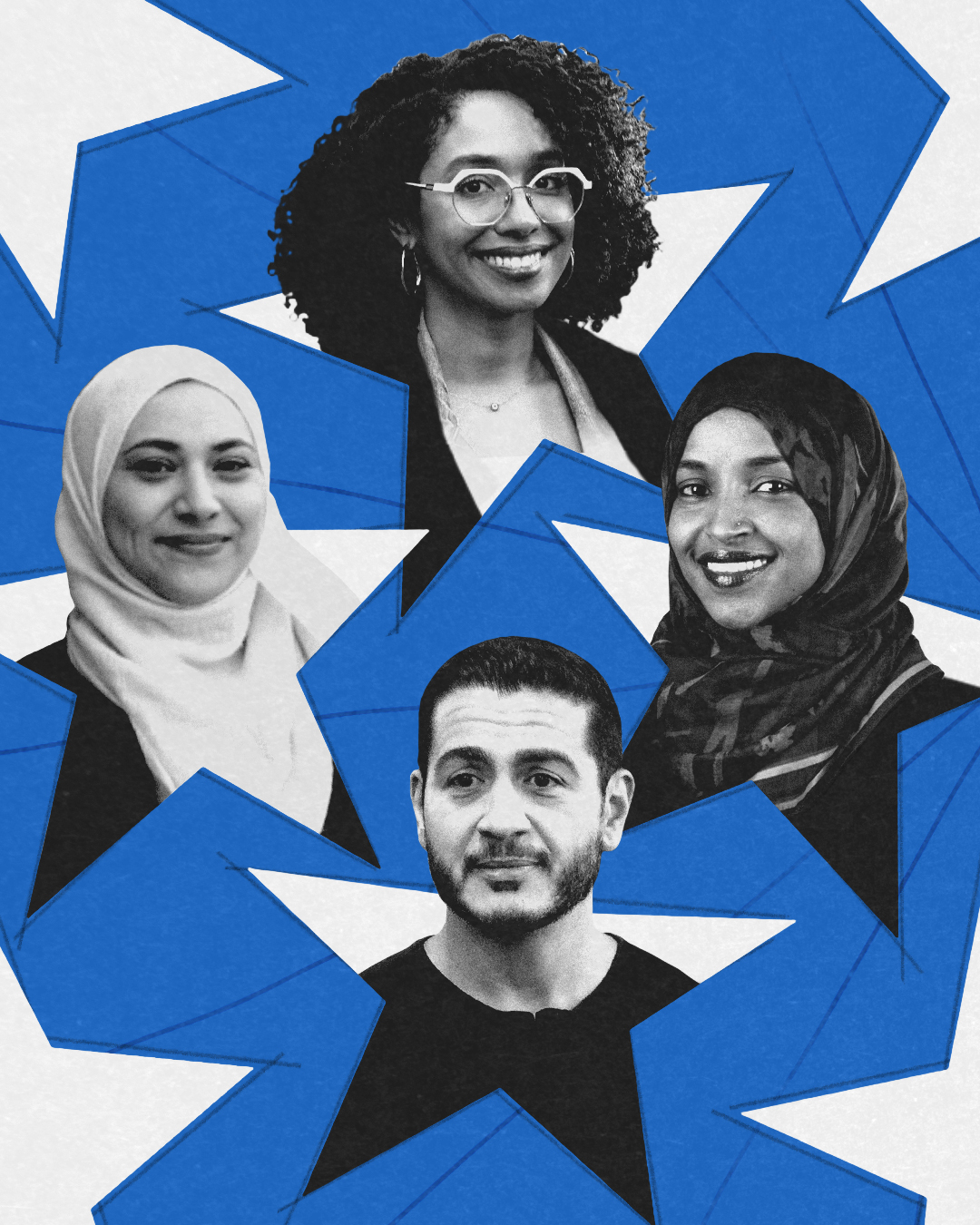
Far from the choral honking of horns across downtown Austin, or the crowd shouting "Paint the Town Blue" at a Doja Cat concert, I have seen and felt the immediate results of this midterm exclusively through my phone screen.
Writing from France, though normally based in Boston, it's been a long while since I've lived in a battleground state. I'm grateful for this fact, at least in terms of my ad experience online, because my algorithm has largely been spared the freakish, cruel, strange, AI-generated, sloppy campaign messaging my family in Florida and kin in North Carolina, Georgia, and Texas wade through every time they open the gram.
Being very online nowadays means I get to watch Muslim leftists and progressives gather yet again to recite their favorite nasheeds about the futility of the ballot box, alongside others singing that strategically and symbolically, Representation Matters™. Non-Muslim socialist, communist, and anarchist spaces somehow also seem to know the words to these nasheeds, wagging their fingers at anyone posting too much elation at the outcome or "libbing out" too hard. “Mamdanistan” got a scolding last year. This year, jokes about Woke 3, mandatory neopronouns, and “everybody gotta learn Arabic” attract similar ire from radicals.
It's difficult for me to lend my voice to this circle as I write from just outside Marseille, a place that feels like an African and Muslim city-state within France, surrounded by right-wing, all-white enclaves that remind me of the sundown towns near my formative community of Jacksonville, Florida. Stereotypically, France is in a season of rebellion right now. But on the ground there is near certainty that the fascist National Rally party will take the helm of government next spring. The National Rally (formerly known as the National Front) is led by Marine Le Pen, someone who managed to rise from her conviction for embezzling public funds, and is the daughter of the French Nazi and military torturer of Algerians during their revolution, Jean-Marie Le Pen.
Times are dark elsewhere, too. Yet, as I scroll, I see those living in Palestine under the gun of the apartheid regime of Israel, celebrating El-Sayed’s election. People in Gaza are connecting with his win even though they know all too well that Muslim political power does not equate to material solidarity, judging by the actions of almost all of their regional neighbors. As Iran prepares its citizens to survive a nuclear bomb, even the Islamic Revolutionary Guard Corps (IRGC) wrote an open letter to American voters ahead of the midterms, telling them that their tax dollars pay for "the genocide in Palestine and Lebanon" and that their votes could change the government. All of these people have more skin in the game than me.
Malcolm X himself, an imperfect but helpful voice to return to when assessing these matters, warned in "The Ballot or the Bullet" (1964) that "until we become politically mature, we will always be misled, led astray, or deceived, or maneuvered into supporting someone politically who doesn't have the good of our community at heart." Once we mature, he said, "whenever we get ready to cast our ballot, that ballot will be cast for a man of the community who has the good of the community at heart." The challenge of elections, particularly when we hoist El-Sayeds or Mamdanis or Avila Chevaliers or other Muslims, is our deep fear about the reality that we have no view into this heart, and we have no certainty about whether our interests can be found there. The opacity of the heart stirs us, drives us toward conflict, and drives some toward despondence and pessimism.
There's no correct way to feel. "Idk man, I think it kinda depends" is the best I can muster for any particular candidate so many folks seem to be excited about. I believe that as long as your feelings about politicians (whatever they may be) guide you toward action in light of your commitments and obligations to others, they are valid. If you are a fan of electoral politics or if you are not seeking revolution, even reform-mindedness should lead you to the conclusion that resistance and rebellion are part of the democratic deal and necessary ways to participate in society. And however unglamorous and silly it may seem, many of those we claim to be in solidarity with speak of the utility of voting. They acknowledge it as a small tool in our arsenal, and see the election of left-leaning politicians as being in their material interests. These voices should not be ignored, and their hopes should not be talked down to.

